
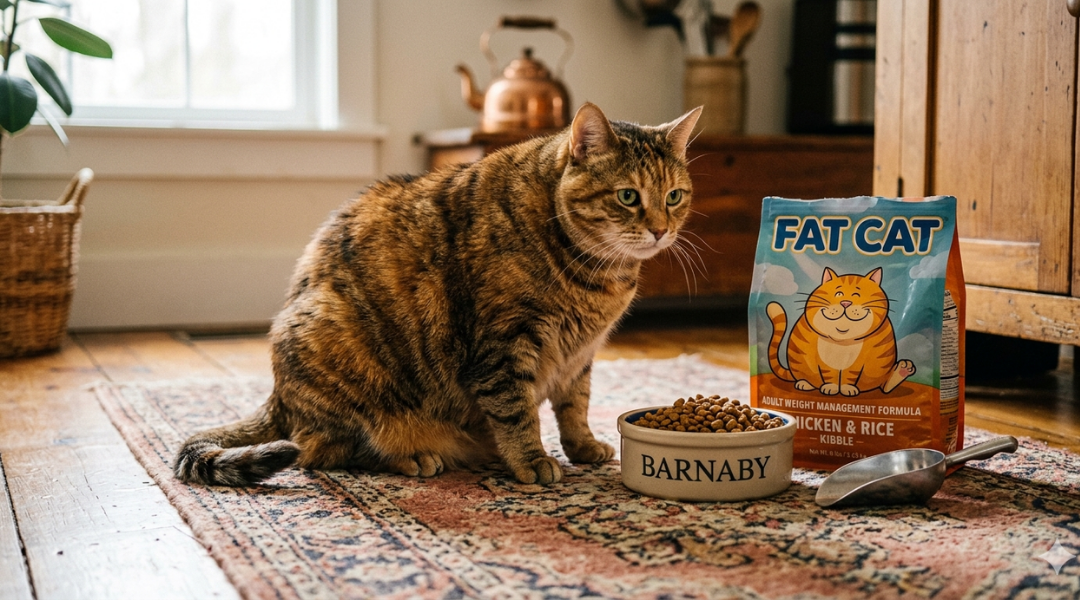
If your cat has gone from “fluffy” to “is that actually a cat or a small ottoman,” you’re not alone. Feline obesity is one of the most common health issues vets see today, and the good news is that the right food, combined with a few lifestyle tweaks, can make a real difference. This guide walks you through how to spot a weight problem, what to look for in cat food designed for weight management, and which products are worth considering.
Is Your Cat Actually Overweight?
Before reaching for a new bag of food, it helps to confirm there’s actually a weight issue. Vets typically use a “body condition score” to assess this rather than just relying on the number on the scale, since healthy weights vary widely by breed and frame size.
A few quick things to check at home:
- Ribs: You should be able to feel your cat’s ribs with light pressure, without a thick layer of fat covering them.
- Waist: Looking down from above, your cat should have a visible waist behind the ribs, not a straight or bulging line.
- Belly: A small amount of belly fat is normal, but a saggy, swinging pouch (sometimes called a “primordial pouch” gone too far) can be a sign of excess weight.
If in doubt, a quick vet visit will give you an accurate read and rule out any medical causes.
Why Cats Gain Weight
Understanding the “why” helps you pick the right solution. Common causes include:
- Overfeeding or free-feeding: Leaving a bowl of dry food out all day makes it easy for cats to overeat, especially indoor cats with little to do.
- Lack of exercise: Indoor cats burn far fewer calories than outdoor hunters.
- Age and metabolism: Cats tend to slow down and gain weight more easily as they get into middle age.
- Spaying/neutering: This can lower a cat’s metabolic rate, meaning the same amount of food may now be too much.
- Breed and genetics: Some breeds are simply more prone to packing on extra pounds.
Why Weight Matters: Health Risks of Feline Obesity
Carrying extra weight isn’t just a cosmetic issue. Overweight cats face a higher risk of:
- Type 2 diabetes
- Joint problems and arthritis, especially in older cats
- Liver disease (hepatic lipidosis), which can develop quickly if an overweight cat stops eating
- Reduced lifespan and lower quality of life, including difficulty grooming and reduced mobility
This is part of why getting ahead of weight gain with the right diet is so important.
What Makes Cat Food Good for Weight Management
Not all “diet” cat food is created equal. Here’s what to actually look for on the label:
High protein, moderate-to-low carbohydrates. Cats are obligate carnivores, and protein helps maintain lean muscle mass during weight loss while keeping cats feeling full. Diets heavy in fillers and carbohydrates tend to pack in more calories without the same satiety benefit.
Lower calorie density, higher fiber. Look for formulas labeled “weight management,” “indoor,” or “light” that reduce calories per cup while adding fiber (like beet pulp or cellulose) to help your cat feel satisfied on a smaller portion.
L-carnitine. Some weight management formulas include this amino acid compound, which may help support fat metabolism.
Wet vs. dry food. Wet food is generally lower in calories per volume and higher in moisture, which can help with satiety and hydration. Many vets recommend incorporating wet food into a weight loss plan, either as a partial or full replacement for dry kibble.
What to avoid: Be cautious of foods that rely heavily on corn, wheat, or other cheap carbohydrate fillers as primary ingredients, as well as “complete” diets with vague calorie information that make portion control difficult.
Types of Cat Food for Overweight Cats
Over-the-counter weight management formulas These are widely available “light,” “healthy weight,” or “indoor” formulas from mainstream brands. They’re a reasonable starting point for cats that are only mildly overweight and otherwise healthy.
Veterinary prescription diets For cats that are significantly overweight or have related health conditions (like diabetes), a vet may recommend a prescription weight loss diet. These are formulated with precise calorie and nutrient ratios and are typically only available through a veterinarian.
High-protein, low-carb formulas Some brands offer grain-free or high-protein options that aren’t specifically labeled “diet” but fit well into a weight management plan due to their macronutrient profile.
Wet food-based plans Switching some or all meals to wet food can naturally reduce calorie intake while increasing water consumption, which supports urinary and kidney health too.
How to Choose: A Quick Checklist
When comparing products, run through this checklist:
- Does the label specify “weight management,” “light,” or similar, with a clear calorie count per cup or can?
- Is the first ingredient a named protein source (chicken, turkey, fish) rather than a grain or meal?
- Does it include added fiber for satiety?
- Is the calorie density appropriate for your cat’s target weight (your vet can help calculate this)?
- Does your cat actually like it? (Even the best diet food doesn’t help if your cat won’t eat it.)
Feeding Tips for Weight Loss
Switching foods is only part of the equation. How you feed matters just as much:
- Measure portions precisely. Use a kitchen scale or measuring cup rather than eyeballing it, and base portions on your cat’s target weight, not current weight.
- Avoid free-feeding. Scheduled meals (2-3 times per day) give you better control than an always-full bowl.
- Use slow feeders or puzzle feeders. These extend mealtime, reduce gulping, and add mental stimulation.
- Transition gradually. Mix new food with old over 7-10 days to avoid digestive upset.
- Go easy on treats. Treats should make up no more than about 10% of daily calorie intake. Consider using small pieces of the cat’s regular kibble or low-calorie options instead.
- Track progress. Weigh your cat every 2-4 weeks to monitor gradual, steady loss. Rapid weight loss in cats can actually be dangerous.
Beyond Food: Lifestyle Changes That Help
Diet works best paired with activity and enrichment:
- Interactive play with wand toys or laser pointers for short sessions throughout the day
- Food puzzles that make your cat “work” for meals, mimicking natural hunting behavior
- Vertical space like cat trees and shelves to encourage climbing and movement
- Multiple small feeding stations placed around the house so your cat has to walk between them
When to See a Vet
Always loop in your veterinarian before starting a weight loss plan, especially for cats that are significantly overweight. A vet can:
- Rule out underlying medical conditions contributing to weight gain
- Calculate a safe target weight and calorie goal
- Recommend or prescribe an appropriate diet
- Monitor progress to ensure weight loss isn’t happening too quickly, which can cause serious liver problems in cats
If your cat suddenly stops eating at any point during a diet change, contact your vet promptly.
Frequently Asked Questions
How much should I feed my overweight cat? This depends on your cat’s target weight, age, and activity level. As a general guide, many weight management foods provide feeding charts based on target weight, but your vet can give you a precise daily calorie goal.
How fast should a cat lose weight safely? A safe rate is generally around 0.5-2% of body weight per week. Faster weight loss increases the risk of hepatic lipidosis, a serious liver condition.
Is wet or dry food better for weight loss? Wet food tends to be lower in calories per volume and higher in moisture, making it a popular choice for weight management, though high-quality dry weight management formulas can also work well, especially when portions are carefully measured.
Can kittens eat weight management food? No. Weight management formulas are designed for adult cats and don’t provide the higher calorie and nutrient density growing kittens need.
Final Thoughts
Helping a cat lose weight is a gradual process that combines the right food, careful portion control, and a bit more activity in their day. Start with a conversation with your vet, choose a food that fits your cat’s specific needs, and track progress patiently. Small, consistent changes add up to a healthier, more comfortable cat in the long run.